

Most people pick a dentist by scrolling a map, and a map cannot tell you whether the office answers the phone on a Wednesday at noon when a molar cracks. Knowing how to choose a dentist in Broken Arrow means checking seven practical things before you ever sit in the chair: the hours, the emergency policy, the way insurance is handled, how findings are explained, how costs are discussed, what equipment is used, and how the team treats nervous patients. Every one of those can be verified with a phone call or a short first visit, and none of them depends on a star rating.
This guide walks through each check in plain terms, shows you what to ask, and finishes with a quick-reference table you can screenshot and keep. If you are comparing a dentist Broken Arrow OK residents recommend against one a coworker mentioned once, these seven checks give you a fair way to measure both.
Why a Checklist Beats a Star Rating
Reviews tell you how someone felt on one afternoon. They rarely tell you whether the office opens before work, whether a chipped tooth can be seen the same day, or whether your plan will be billed correctly. Those are logistics, and logistics are what decide whether a dental home works for your family over many years.
Dental care is also less of a one-time purchase than it looks. Cavities and gum disease are the leading causes of tooth loss, and the CDC notes that most oral disease is largely preventable through professional care and daily habits. Preventable only counts if you can actually get to appointments, which is why scheduling and access sit at the top of the list below.
How to Choose a Dentist in Broken Arrow: The 7-Point Checklist
Use the table first as a summary, then read the detail underneath each row. Everything in the table is explained in the sections that follow.
| What to check | Why it matters | What to ask |
|---|---|---|
| 1. Office hours | Closed days and lunch breaks decide when you can call | Which days are you open, and do you close for lunch? |
| 2. Same-day emergencies | Broken teeth and severe toothaches cannot wait a week | Do you see emergencies the same day, and when should I call? |
| 3. Insurance handling | Insurance confusion is a common reason a first visit goes sideways | Do you take my PPO, check benefits first, and file claims for me? |
| 4. Plain-language explanations | You can only agree to what you understand | Will you explain findings and each step before it happens? |
| 5. Cost and treatment planning | A plan you can afford is a plan you will finish | Is cost explained before treatment, and can work be staggered? |
| 6. Technology | Imaging helps the team see what is happening beneath the surface | Do you use digital x-rays and an intra-oral camera? |
| 7. Comfort for anxious patients | Dental fear keeps many adults away from the chair for years | What options exist if I am nervous, and can we go at my pace? |
1. Check the hours against your real schedule
Start with the calendar, not the website photos. Dentistry For You is open Monday to Thursday from 8 am to 5 pm, with the office closed from 12 to 1 for lunch, and it is closed Friday to Sunday. That is a very different pattern from an office that offers Saturday appointments, and neither pattern is wrong. What matters is whether it fits you. A parent who works a fixed shift in Tulsa and picks up kids in Broken Arrow needs to know that the front desk is unreachable from noon to 1, and that the weekend is off the table for routine visits.
Ask which days are open, whether lunch closes the phones, and how far ahead new-patient visits are usually booked. Then picture the visit: where you park, how long the drive from Jenks, Bixby, or Owasso would take, and what you would tell your employer.
2. Confirm how emergencies are handled
A dental emergency rarely arrives at a convenient moment, so ask the question before you need the answer. Dentistry For You offers same-day emergency appointments for broken or chipped teeth, severe toothaches, and lost crowns or fillings, and calling early in the day gives you the best chance of being seen that same day. That detail matters because the weekend closure above means an emergency on Friday afternoon needs a plan.
The American Dental Association’s guide to emergencies recommends seeing your dentist as soon as possible and heading to an emergency room if the office is closed. A good question to ask any practice is simple: “If my tooth breaks at 2 pm on a Tuesday, what happens?” The answer should be specific, not a vague promise.
3. Ask exactly how insurance is handled
Insurance confusion is one of the most common reasons a first visit goes sideways. Dentistry For You accepts most major PPO plans, including Delta Dental, Cigna, MetLife, Guardian, Humana, and Blue Cross Blue Shield, among others. The office checks your benefits before the visit and files claims electronically, so you are not left decoding a form at the counter. For anyone without coverage or facing a larger treatment plan, 0% APR financing is available through CareCredit, subject to approval.
When you call any office, give them your plan name and ask three things: whether they take it, whether they verify benefits before you arrive, and who submits the claim. If the answers are unclear, expect the bill to be unclear too.
4. Look for plain-language explanations
A dentist can be technically excellent and still leave you confused. The test is what happens after the exam. At Dentistry For You, the team explains each step before it happens, and findings from the exam are explained in plain language rather than in shorthand. You should leave knowing what was found, what it means, and what happens if you wait.
One easy way to test this is to ask a question that sounds basic. If the answer makes you feel rushed or foolish, that is useful information. The first-visit experience is described in detail on the visit page, including what to bring and what the appointment covers.
5. Make sure cost is explained before treatment
Nobody wants to hear a number after the work is already done. A responsible practice presents a treatment plan and explains the cost before treatment begins. At Dentistry For You, treatments can also be prioritized and staggered to fit a timeframe and budget, which means a larger plan does not have to land all at once. Costs vary with the type of treatment, your insurance benefits, and how many visits are involved, so the honest answer is always “it depends until we have examined you.” If you would like a straightforward figure for your own situation, contact the office for a free consultation or free estimate.
Ask any practice you are considering whether a written plan is provided, whether urgent work is separated from work that can wait, and whether payment options exist.
6. Notice the technology, but ask what it does for you
Equipment lists can sound like marketing, so translate each item into a benefit. Dentistry For You uses digital x-rays, 3D imaging, an intra-oral camera, and a soft tissue laser. Digital x-rays and 3D imaging help the team see what is happening beneath the surface, and the intra-oral camera lets you see the same image on a screen instead of taking someone’s word for it. The ADA explains that how often x-rays are taken depends on each patient’s oral health, age, and risk, and it describes digital receptors as one of the safety practices used in dental imaging. That is a good reminder that more images are not automatically better; the right images at the right time are.
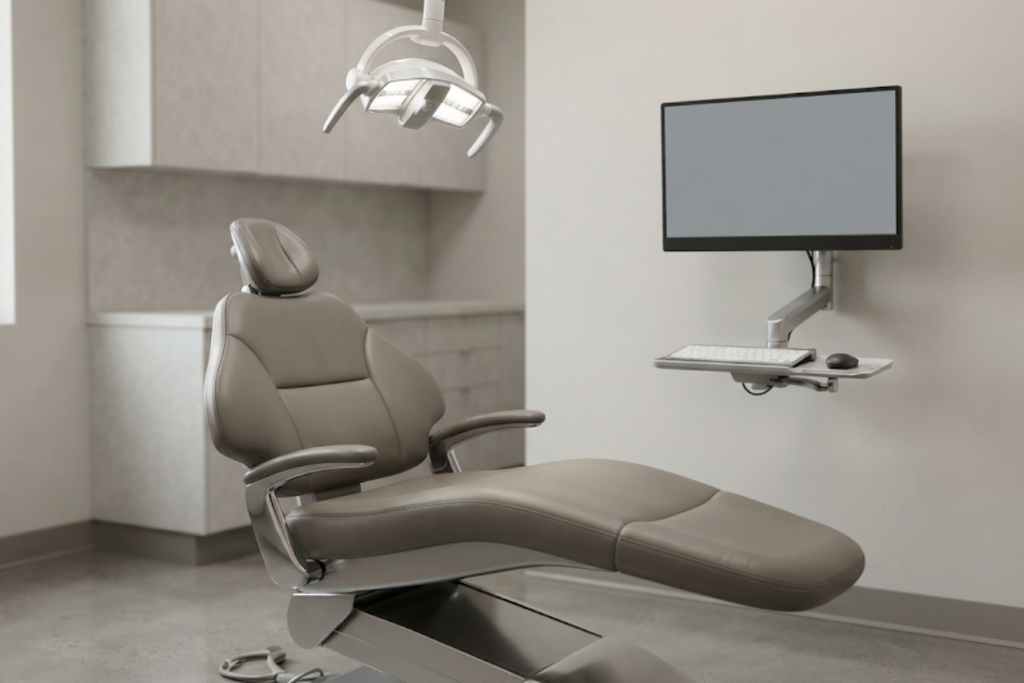
The first visit at Dentistry For You includes full-mouth x-rays, a comprehensive exam of the teeth, gums, mouth, and jaw, and a non-invasive oral cancer screening. The National Institute of Dental and Craniofacial Research advises seeing a dentist or doctor for mouth or throat symptoms that last more than two weeks, and a routine exam is where early changes tend to be spotted.
7. Ask how the practice treats anxious patients
Dental fear keeps many adults away from the chair for years, and the delay usually makes treatment bigger. The MedlinePlus dental health page from the National Library of Medicine stresses seeing a dentist regularly, which only works if the visit feels manageable. Dentistry For You explains each step before it happens, goes at the patient’s pace, and offers options for anxious patients, including sedation dentistry with laughing gas and oral sedation.
If you are nervous, say so when you book. A good office will not treat that as a problem. It will treat it as information that helps them plan your appointment.
Why Choose Dentistry For You for a Practical Broken Arrow Checklist
Run Dentistry For You through the seven checks above and the answers are concrete. The office is at 2522 E Kenosha St in Broken Arrow, OK, open Monday to Thursday, 8 am to 5 pm, closed 12 to 1 for lunch. Same-day emergency appointments are available for broken or chipped teeth, severe toothaches, and lost crowns or fillings, and the best way to improve your odds is to call early in the day. Benefits are checked before your visit, claims are filed electronically, and most major PPO plans are accepted.
On the explanation side, new patients complete forms online or on in-office tablets, or they can arrive 15 minutes early, then bring an insurance card and photo ID. The team explains findings in plain language, lays out a treatment plan with the cost explained before treatment, and can stagger the work to fit a timeframe and budget. New patients of all ages are welcome, which helps when a household wants one dental home rather than two or three. Patients also come from Tulsa, Jenks, Bixby, Owasso, and Coweta, so the same checklist applies wherever you are driving from.
Those are facts you can verify, not adjectives, and that is the point of a checklist. If you would like to see how the practice answers your own questions, you can schedule a new-patient visit and ask each one in person.
If you are also thinking about your daily routine before the visit, the post on hygiene mistakes is a useful companion read, and it will help you arrive with better questions.
Conclusion
Learning how to choose a dentist in Broken Arrow is mostly about asking better questions before you commit. Check the hours against your real schedule, find out what happens in an emergency, confirm how insurance is handled, and make sure you will leave each visit understanding what was found and what it will cost. Add a look at the technology and an honest question about comfort, and you have a fair way to compare any practice in town.
Dentistry For You welcomes new patients of all ages, and the easiest way to test the checklist is to call and ask. Book a first visit, bring your insurance card and photo ID, and bring your questions too.
Ready to see how a practice answers your checklist? Contact Dentistry For You in Broken Arrow, OK to book your new-patient visit or request a free estimate.
Frequently Asked Questions
How do I know if a dentist is right for me?
A good fit shows up in practical ways: convenient hours, a clear emergency policy, transparent billing, and explanations you can follow. Many people schedule a first visit specifically to see whether the dentist listens and whether the office communicates clearly. If it does not feel like a fit, you can keep looking.
What should I ask a new dentist before my first appointment?
Ask which insurance plans are accepted, whether benefits are verified in advance, and how emergencies are handled. It is also reasonable to ask whether a written treatment plan is provided and whether payment options are available. If you are anxious, ask what comfort options exist.
How often should I see a dentist?
Many people are advised to have a checkup and cleaning about every six months, but the right schedule depends on your oral health, age, and risk for disease. Your dentist can tell you whether you need visits more or less often. Those with gum disease or a high cavity risk are often seen more frequently.
Does a dentist have to accept my dental insurance?
No. Dental offices choose which plans to contract with, and a plan may cover more when you see an in-network provider. Call the office with your plan name and ask whether they are in network before you book. Your insurer can also confirm what your plan covers.
What counts as a dental emergency?
Common dental emergencies include a knocked-out tooth, a broken or cracked tooth, a severe toothache, and swelling in the face or gums. A lost crown or filling that causes pain also needs prompt attention. If you cannot reach a dentist and have trouble breathing or swallowing, go to an emergency room.