A dental implant replaces the root of a missing tooth with a small post, usually made of titanium, that is placed in the jawbone. As the area heals, the bone bonds with the implant, creating a stable foundation for a replacement tooth. A crown is then attached to restore the visible part of the tooth.
At Dentistry For You in Broken Arrow, dental implants may be an option for replacing a single missing tooth, several missing teeth, or helping stabilize a denture. The right approach depends on your oral health, the condition of your jawbone, and the type of replacement that best meets your needs.
What Makes Dental Implants Different?
A dental bridge and a removable denture can both replace missing teeth, but they work differently from implants.
A traditional bridge is supported by neighboring teeth, which typically need to be reshaped to hold the replacement. A removable denture rests on the gums and may move during eating or speaking. A dental implant is anchored in the jawbone and can support a replacement tooth without relying on adjacent teeth for support.
Implants also help maintain the bone in the area of a missing tooth. Natural tooth roots transmit chewing forces to the jawbone, and an implant can provide similar stimulation. Although bone changes can still occur, replacing a missing tooth with an implant may help limit bone loss in that area.

What to Expect During Dental Implant Treatment
Dental implant treatment takes place in stages, with healing time between certain steps. For many patients, the process takes several months, although the timeline depends on the condition of the bone and gums, whether additional procedures are needed, and how healing progresses.
1. Evaluation and Planning
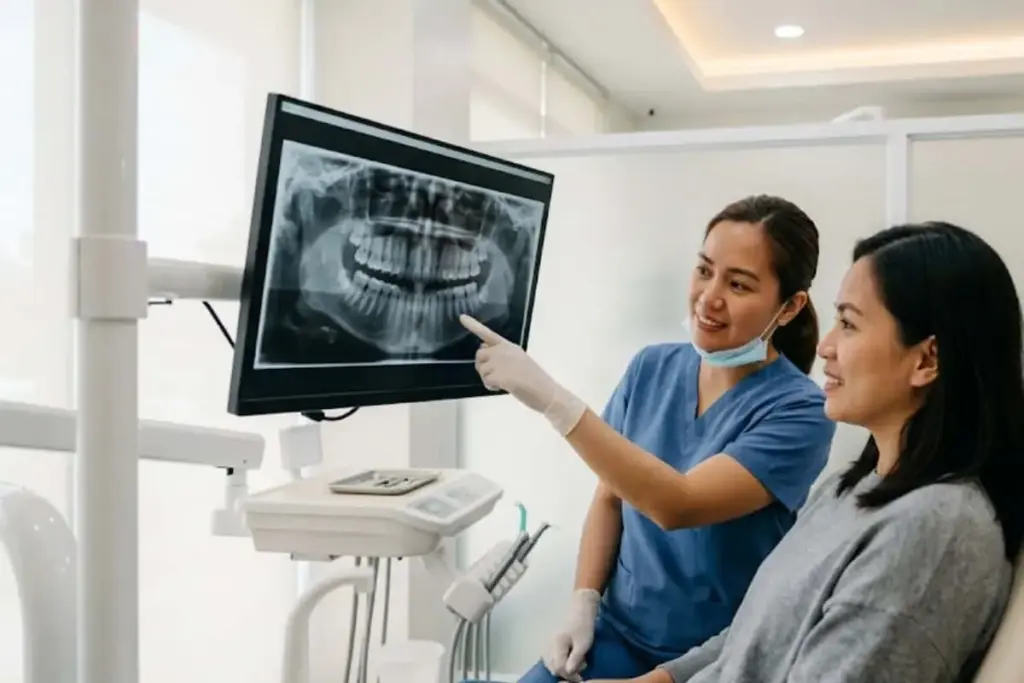
Treatment begins with an examination and a review of your dental and medical history. Dental X-rays or a 3D scan may be used to assess the bone, examine nearby structures, and help plan implant placement.
We’ll discuss your missing tooth, your goals, and the available replacement options. This evaluation helps determine whether an implant is appropriate and whether any additional treatment may be needed.
2. Preparing the Site
Some patients have enough healthy bone to support an implant right away. Others may need a bone graft to build up the area before an implant can be placed.
Bone grafting may be recommended when the jawbone has lost volume after a tooth was removed or has been missing for some time. If a graft is needed, additional healing time may be required before the next stage.
3. Implant Placement and Healing
The implant is placed in the jawbone during a surgical procedure. As the area heals, the bone gradually bonds with the implant in a process called osseointegration. This creates the foundation needed to support the replacement tooth.
The amount of healing time required varies from patient to patient. Your dental team will explain what to expect based on your treatment plan.
4. Attaching the Replacement Tooth
Once the implant is ready to support a restoration, a connector called an abutment may be attached. An impression or digital scan is then used to create the replacement crown or other restoration.
The finished restoration is placed and adjusted to fit your bite and function comfortably. Your dentist will explain how to care for it and keep the surrounding gums healthy.

Replacing Several Teeth With Dental Implants
You don’t necessarily need one implant for every missing tooth. Depending on your situation, a small number of implants may support a bridge that replaces several teeth.
Implants can also help replace most or all of the teeth in an upper or lower arch. Depending on the treatment plan, they may support a fixed bridge or help secure a removable denture.
For people who struggle with a denture that slips or moves, an implant-retained denture may provide added stability during eating and speaking. Whether this option is suitable depends on factors such as bone support, oral health, and the type of denture.
The number of implants needed and the type of restoration recommended will depend on your individual needs.
Learn more about your options on our dentures page.
Who Is a Candidate for Dental Implants?
Many adults with missing teeth may be candidates for dental implants, but an examination is needed to determine whether treatment is appropriate.
Several factors affect implant treatment, including:
Bone health: There needs to be enough bone to support the implant, or you must be a suitable candidate for bone grafting.
Healthy gums: Active gum disease should be addressed before implant placement.
General health: Certain health conditions and medications can affect healing and need to be reviewed.
Smoking: Smoking can increase the risk of complications and affect healing.
Daily oral care: Keeping the implant and surrounding gums clean is important for long-term success.
Conditions such as diabetes do not automatically rule out implants, but poorly controlled diabetes can interfere with healing. Your dentist will review your medical history and discuss any factors that could affect treatment.
If an implant isn’t the best option for you, other ways to replace missing teeth may be available. The goal is to find an approach that fits your dental health and circumstances.
Caring for Your Dental Implant
A dental implant cannot develop a cavity, but the surrounding gums and bone still need attention. Bacteria can cause inflammation around an implant and may damage the supporting bone if the condition progresses.
To help protect your implant:
Brush twice a day and clean carefully around the implant.
Clean between your teeth and around the restoration daily using the method recommended by your dental team.
Keep up with regular dental checkups and professional cleanings.
Contact your dentist if you notice bleeding, swelling, discomfort, or movement around the implant or its restoration.
Regular follow-up visits allow your dental team to monitor the implant, the surrounding tissues, and the replacement tooth. With appropriate care, dental implants can last for many years, although their long-term success depends on several individual factors.
Schedule a Dental Implant Consultation in Broken Arrow
If you’re missing a tooth or having trouble with a denture that doesn’t feel secure, a consultation is a good place to start. We’ll review your situation, discuss possible treatment options, and explain the steps involved before you make a decision.
Ready to Schedule Your First Visit?
We're happy to welcome new patients to Dentistry For You in Broken Arrow. If you have questions about your first appointment, insurance, or what to expect, give our team a call.
Request an appointment
Send this and the front desk will follow up to confirm a time and check your insurance before you arrive.