
We welcome children at Dentistry For You in Broken Arrow from an early age. Those first visits are a chance to get to know the dentist, check how your child’s teeth are developing, and help dental appointments feel like a normal part of growing up.
Our goal is to help children feel comfortable while giving parents practical guidance on caring for little teeth at home.
Your Child’s First Dental Visit
The American Dental Association recommends scheduling a child’s first dental visit by their first birthday or within six months of their first tooth appearing.
At an early visit, we’ll look at how your child’s teeth are coming in, check their gums and mouth, and talk with you about brushing, feeding habits, and what to expect as more teeth appear.
Your child may sit on your lap during the exam, depending on their age and comfort level. Some children are ready to open wide right away; others need a little more time to get used to the experience. We’ll work with your child at a pace that makes sense for them.

Helping Children Feel Comfortable at the Dentist
A positive early experience can help children feel more at ease with dental visits as they grow. We want them to know what to expect and feel comfortable asking questions.
A few things can make a difference:
- Explain things simply. We use age-appropriate language to help children understand what’s happening.
- Give them time to adjust. A new room, new faces, and unfamiliar sounds can take some getting used to.
- Keep the conversation positive. Talking about the dentist as a normal part of staying healthy can help reduce anxiety.
- Let us know about concerns. If your child is nervous or has had a difficult dental experience, tell us when you schedule. We can discuss ways to help make the visit more comfortable.
Every child is different, and there's no need to expect a perfect first appointment. Getting familiar with the office is a worthwhile start.
Brushing and Caring for Your Child’s Teeth at Home
Good dental habits begin as soon as the first tooth appears. Use a soft, age-appropriate toothbrush and a smear of fluoride toothpaste about the size of a grain of rice for children younger than three. For children ages three through six, use a pea-sized amount, with an adult supervising.
Young children need help brushing because they may not yet have the coordination to clean every surface thoroughly. Continue helping or supervising until your child can brush well on their own.
Cleaning between teeth is also important once the teeth touch and a toothbrush can no longer reach between them. Your dentist can show you how to care for your child's teeth as their smile develops.
Regular checkups give us a chance to answer questions, monitor your child’s oral health, and recommend preventive care when needed.
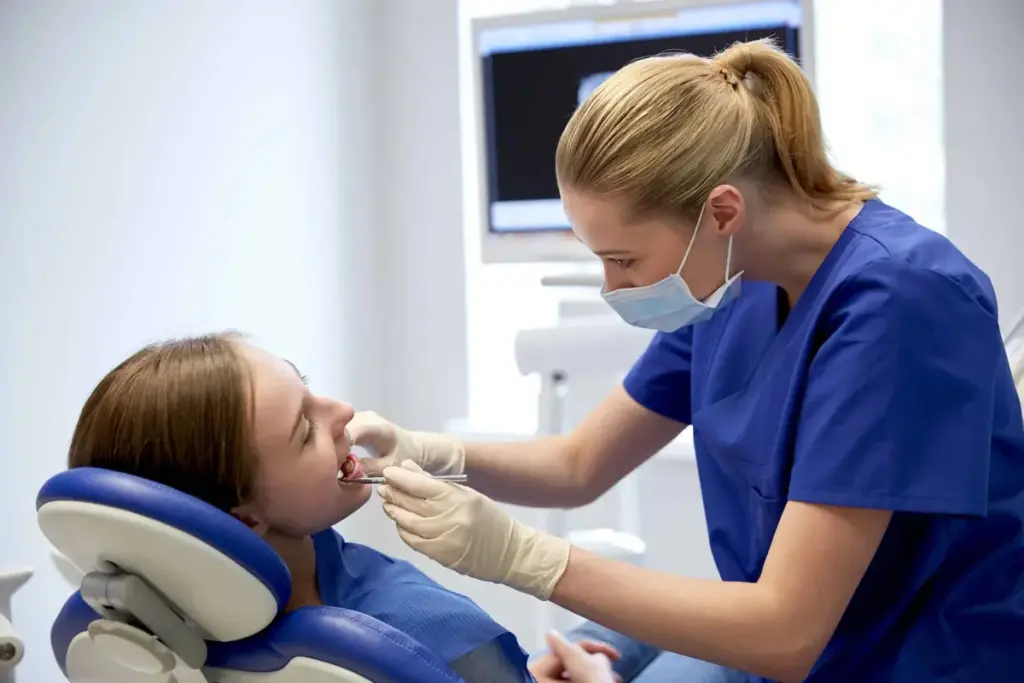
Dental Sealants and Fluoride Treatments
As children grow, preventive treatments can help protect their teeth from cavities.
Dental Sealants
Permanent molars often begin coming in around age six, with another set appearing around age twelve. The chewing surfaces of these back teeth have grooves where food and plaque can collect, making them harder to clean thoroughly.
Dental sealants are thin protective coatings applied to the chewing surfaces of certain teeth. The process is usually quick and does not typically require drilling or numbing. Sealants can help lower the risk of cavities in the treated areas.
Your dentist can check whether your child’s teeth would benefit from sealants.
Fluoride Treatments
Fluoride helps strengthen tooth enamel and protect against cavities. Depending on your child’s age and risk of tooth decay, a professional fluoride treatment may be recommended during a dental visit.
Fluoride can also help remineralize enamel affected by the earliest stages of decay. Your dentist can explain whether additional fluoride protection is appropriate for your child.
Sugar, Snacks, and Your Child’s Teeth
What children eat and drink matters, but how often their teeth are exposed to sugar matters, too. When bacteria in plaque use sugars, they produce acids that can weaken tooth enamel. Frequent snacking or sipping sugary drinks throughout the day can give teeth less time between acid attacks.
A few habits can help protect your child’s smile:
- Offer water between meals instead of sugary drinks.
- Keep juice, sweets, and other sugary snacks occasional rather than frequent.
- Avoid putting a child to bed with a bottle containing milk, formula, juice, or other drinks with sugar.
- Brush twice a day with fluoride toothpaste and follow your dentist’s recommendations.
You don’t have to get every habit perfect. Small, consistent steps can make a difference over time.
What to Do if Your Child Injures a Tooth
Dental injuries can happen during play, sports, or everyday activities. If your child chips, breaks, or knocks out a tooth, call our office promptly so we can help you determine what to do next.
If a baby tooth is knocked out, do not try to put it back into the socket. Doing so could damage the developing permanent tooth underneath it. Apply gentle pressure with clean gauze to help control bleeding and contact a dentist for guidance.
If a permanent tooth is knocked out, seek emergency dental care immediately. Time matters. Handle the tooth by the crown rather than the root, and avoid scrubbing it. If possible, gently place it back in its socket without forcing it. If that isn't possible, keep it moist in milk and get urgent dental care. For a young child, don't place the tooth in their mouth to keep it moist because they could swallow or inhale it.
Call (918) 355-1391 right away for guidance, and visit our emergency dentistry page for more information. If your child has a serious injury or uncontrolled bleeding, seek emergency medical care.
Schedule Your Child’s Dental Visit
Whether your child is ready for their first checkup or it’s time for another cleaning, we’re here to help you take the next step. When you call, let us know your child’s age and whether they have any concerns about visiting the dentist.