
A dental bridge replaces one or more missing teeth by attaching a replacement tooth to supporting teeth on either side of the gap. Unlike a removable partial denture, a traditional bridge is cemented in place and does not need to be taken out at night.
At Dentistry For You in Broken Arrow, we can help you understand whether a dental bridge, dental implant, or partial denture is the right option for your missing tooth. The best choice depends on the condition of your neighboring teeth, your oral health, and your goals for treatment.
Why Consider Replacing a Missing Tooth?
A missing tooth may not cause immediate discomfort, especially if it's toward the back of your mouth. However, leaving a gap can sometimes affect your bite and the teeth around it.
Over time, neighboring teeth may shift toward the open space, and the tooth opposite the gap may move farther out of its original position. These changes don't happen in every case, but they can affect how your teeth fit together and make certain areas harder to clean.
The jawbone in the area of a missing tooth can also lose volume over time because it no longer receives stimulation from that tooth's root. This may affect future tooth-replacement options, including whether bone grafting is needed before an implant can be placed.
Replacing a missing tooth can help restore chewing function and maintain a more balanced bite. Your dentist can examine the area and explain whether replacing the tooth is recommended.

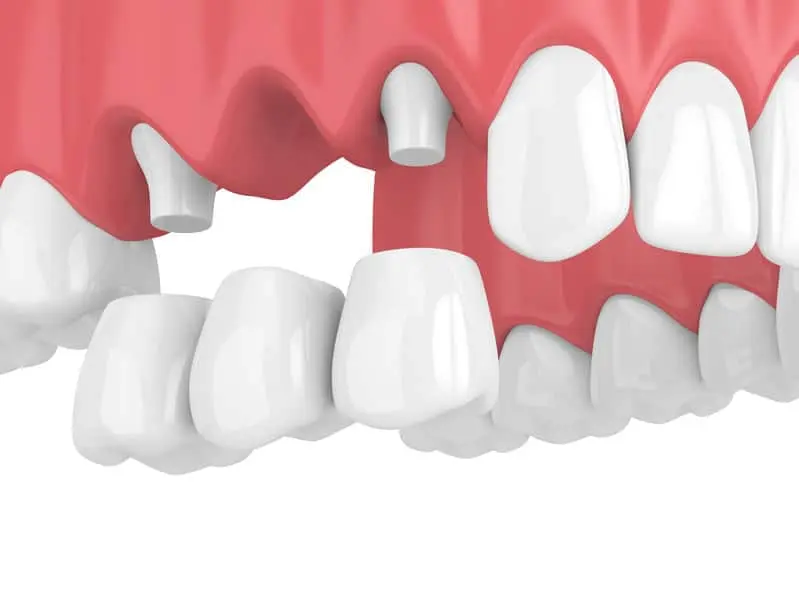
How Does a Dental Bridge Work?
A traditional dental bridge uses the teeth on either side of a gap for support. These supporting teeth are prepared for crowns, which are connected to a replacement tooth called a pontic.
The bridge is made as a single restoration and cemented into place. Once fitted, it functions as a fixed replacement for the missing tooth.
The supporting teeth need to be healthy and strong enough to carry the additional load. Your dentist will evaluate their condition, the size of the gap, and your bite to determine whether a traditional bridge is appropriate.
Dental Bridge vs. Implant vs. Partial Denture
There are several ways to replace a missing tooth, and each has advantages and limitations.
Dental Bridge
A bridge may be a good option when the neighboring teeth already need crowns or when an implant isn’t suitable. It is fixed in place and doesn’t require implant surgery.
The trade-off is that the supporting teeth usually need to be reshaped to hold the bridge, even if they were previously healthy.
Dental Implant
A dental implant replaces the missing tooth’s root and supports a crown without relying on neighboring teeth for support. It may help preserve bone in the area, but treatment involves surgery and a healing period that can extend over several months. Some patients also need additional procedures, such as bone grafting.
An implant may be worth considering when the neighboring teeth are healthy, but whether it’s the best option depends on your individual circumstances.
Learn more on our dental implants page.
Removable Partial Denture
A partial denture replaces one or more missing teeth with a removable appliance. It generally doesn’t require the same preparation of neighboring teeth as a traditional bridge and may have a lower initial cost.
However, it must be removed for cleaning and may feel different from a fixed restoration when eating or speaking.
Visit our dentures page to learn more.
The right choice isn’t the same for everyone. We’ll explain the options for your particular gap, including the benefits, limitations, and costs to consider before you decide.
What to Expect When Getting a Dental Bridge
Getting a traditional bridge generally involves two appointments when the restoration is made by a dental laboratory.
First Appointment
The supporting teeth are numbed and prepared for the crowns. Your dentist then takes impressions or a digital scan and selects a shade that blends with your natural teeth.
A temporary bridge may be placed to protect the prepared teeth while the permanent restoration is being made.
Second Appointment
When the permanent bridge is ready, your dentist checks how it fits, how the replacement tooth sits against the gum, the color, and how your bite comes together.
Any necessary adjustments are made before the bridge is cemented into place. Your dental team will also explain how to clean beneath the replacement tooth and care for the supporting teeth.
How to Clean and Care for a Dental Bridge
Cleaning beneath a dental bridge is especially important because food and plaque can collect around the replacement tooth and along the gumline.
Since the bridge is connected as one piece, you generally can’t floss between the joined units the same way you would between natural teeth. A floss threader, special bridge floss, or an appropriately sized interdental brush can help you clean underneath the replacement tooth.
Your dentist or hygienist can demonstrate the best technique for your particular bridge.
Good daily care helps protect the gums and the supporting teeth from decay and inflammation. Continue brushing twice a day, cleaning beneath the bridge as recommended, and attending regular dental checkups. Contact your dentist if the bridge feels loose, causes discomfort, or if the surrounding gums become swollen or bleed.
How long a bridge lasts depends on several factors, including the health of the supporting teeth, your bite, the materials used, and how well the area is maintained.
Discuss Your Tooth Replacement Options in Broken Arrow
If you’re missing a tooth, you don’t have to decide on a treatment before coming in. Dentistry For You can examine the area, explain your options, and help you understand the differences between a bridge, implant, and partial denture.