
Professional teeth whitening lightens natural enamel several shades further than a supermarket kit, using a stronger gel held in trays made from impressions of your own teeth. At Dentistry For You in Broken Arrow, whitening starts with a check that there is nothing underneath that needs treating first.
Why Teeth Go Yellow
There are two different problems and they respond differently.
Surface staining comes from what passes over the teeth: coffee, tea, red wine, dark sodas and tobacco. It sits on the outside of the enamel and responds well to whitening, and a good deal of it comes off at a routine cleaning.
Internal discolouration is different. Enamel thins with age and the dentine underneath, which is naturally yellow, shows through more. Some medications taken in childhood, particularly tetracycline, band the tooth from the inside. A tooth that has had trauma or a root canal can darken on its own. Whitening helps with some of this and not much with the rest, which is where veneers come in.
We will tell you which of the two you have before you spend anything, because it changes what is realistic.

How Take-Home Whitening Works
We take impressions and have custom trays made, usually ready within a few days. The trays are thin, fit closely, and are trimmed at the gum line so the gel stays where it is meant to be.
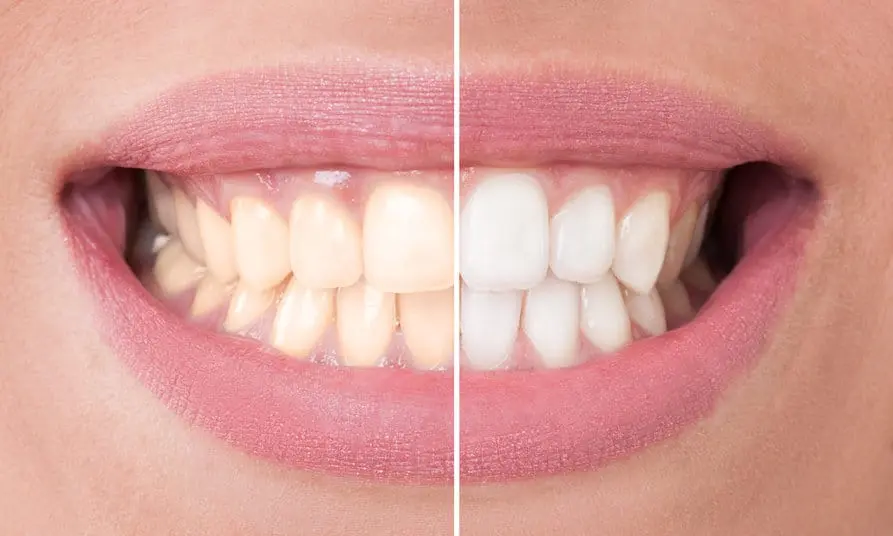
You wear them with a small amount of gel for the time we specify, generally over one to two weeks. Most of the visible change happens in the first few days, with the rest evening out over the following week. Because you control the pace, you can stop when you reach a shade you like rather than being committed to a single session.
What It Will Not Do
Whitening works only on natural tooth structure. Crowns, veneers, bridges and composite fillings do not change colour, so if you have a crown on a front tooth it will stay exactly as it is while everything around it gets lighter. In that situation the sequence is to whiten first, hold the new shade for a couple of weeks, then have the restoration remade to match.
Whitening also does not fix chips, gaps or crowding. Those need bonding, veneers or orthodontics.
Sensitivity
Some sensitivity during whitening is common and it settles within a day or two of finishing. It is usually a brief sharp response to cold rather than a constant ache.
If it is bothering you, the answer is not to push through. Shorten the wear time, skip a day, or switch to a desensitising toothpaste for a while. Tell us and we will adjust the plan. Sensitivity that does not settle after whitening ends is worth having looked at, because it usually points at something else.
Making It Last
Most people keep a clearly whiter result for one to three years, and what you drink decides more of that than the treatment itself. The first forty-eight hours matter most, when the enamel is more porous, so it is worth avoiding coffee, tea, red wine and anything dark in that window.
After that, drinking staining liquids through a straw helps, rinsing with water afterwards helps, and keeping your regular cleanings removes a good deal of surface stain before it settles in. Keep the trays. Topping up for a night or two once or twice a year is far cheaper than starting again.
Before You Whiten
Whitening gel reaching an untreated cavity or an exposed root surface is genuinely painful, and whitening over gum disease is treating the wrong problem. So the first appointment is an exam, not a sales conversation.
Call (918) 355-1391 or use the contact form.
Book a Whitening Consultation
We will check the shade, look for anything that needs treating first, and take impressions for your trays.